
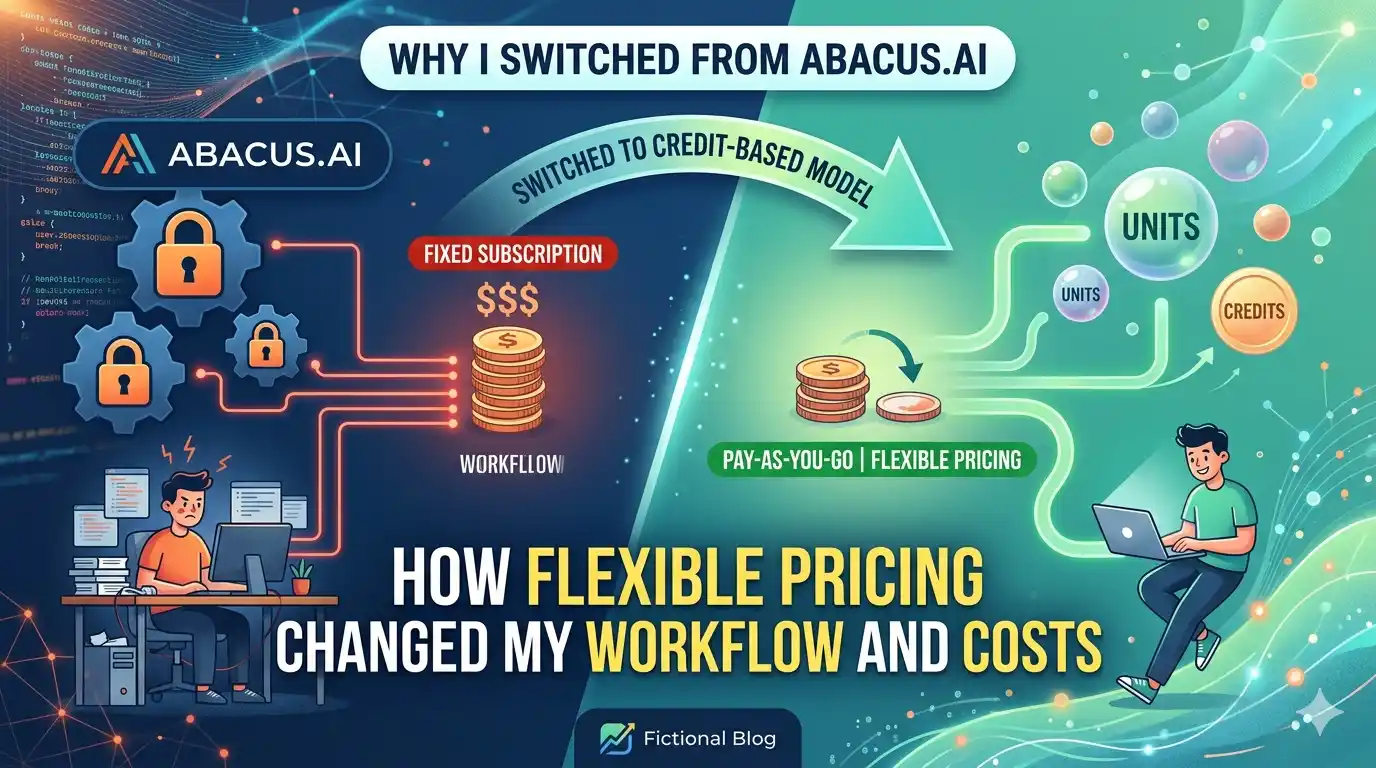
Why I Left Abacus.AI for a Credit-Based AI Model
My Experience with Abacus.AI
For a long time, I relied on Abacus.AI as my primary platform for building and deploying machine learning solutions. It offered a solid all-in-one environment, especially for managing models and scaling workflows.
The Problem with Traditional Pricing
However, as my needs evolved—particularly with the rise of generative AI—I started to notice limitations in how pricing and usage were structured. Traditional platform pricing often felt rigid, especially when experimenting with different models or scaling usage up and down.
Paying for Unused Capacity
I found myself paying for capacity I wasn’t always using, which made it harder to justify the cost during lighter workloads.
Why I Switched to a Credit-Based AI Model
Switching to an AI model that operates on a credit-based system completely changed that experience. Instead of committing to fixed pricing tiers, I could pay for exactly what I used.
More Flexibility and Experimentation
This allowed me to experiment more freely, test different prompts and models, and optimize my workflows without constantly worrying about hitting predefined limits.
Better Cost Transparency
Credit-based systems made it much clearer how much each task or request actually cost. That visibility helped me make better decisions about where to invest resources.
Final Thoughts
This isn’t to say Abacus.AI isn’t a strong platform—it absolutely is, especially for teams needing a structured, end-to-end ML pipeline. But for my current needs, which lean heavily toward flexibility, experimentation, and cost control, moving to a credit-based AI model was the better fit.
Ultimately, the decision came down to aligning tools with how I work today: fast-moving, iterative, and cost-conscious.


















Post Tags
Follow tags & authors — get email updates when they publish
Add your first comment to this post